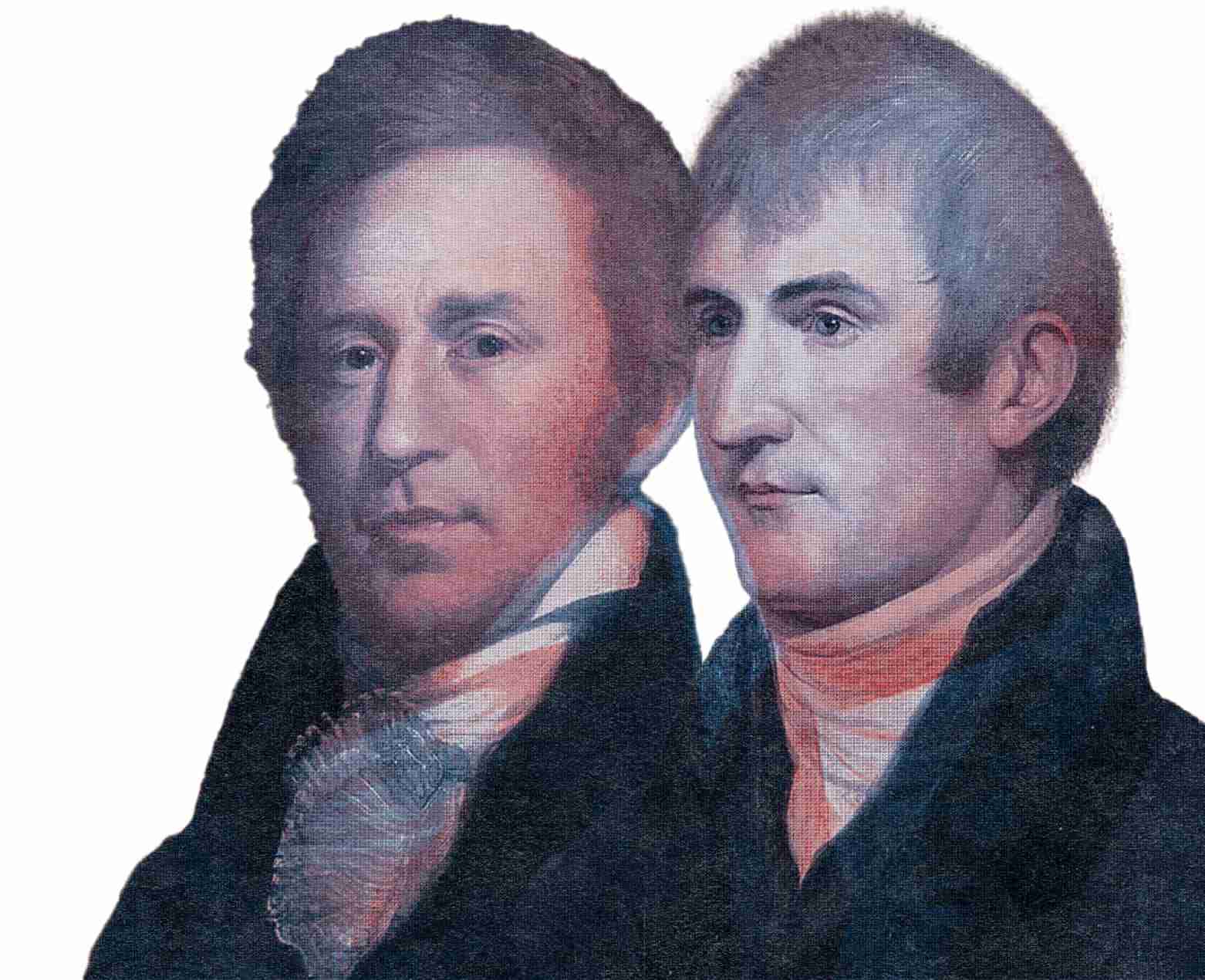
Lord Howe received the Gentlemen on the BeachDr. Franklin introduced Mr. Adams and Mr. RutledgeLord Howe very politely expressed the Sense he entertained of the Confidence they had placed in him, by thus putting them-selves in his hands
A general and immaterial Conversation from the Beach to the HouseThe Hessian Guard saluted, as they passed
A cold dinner was on the Tabledinedthe Hessian Colonel presentImmediately after dinner he retired
Lord Howe informed them it was long since he had; entertained an opinion that the Differences between the two Countries might be accommodated to the Satisfaction of boththat he was known to be a Well Wisher to Americaparticularly to the Province of Massachusetts Bay, which had endeared itself to him by the very high Honors it had bestowed upon the Memory of his eldest Brotherthat his going out as Commissioner from the King had been early mentioned, but that afterwards for some time, he had heard no more of itThat an Idea had then arisen of sending several Commissioners, to which he had objectedthat his Wish was to go out singly and with a Civil Commission only, in which case, his Plan was to have gone immediately to Philadelphia, that he had even objected to his Brothers being in the Commission, from the Delicacy of the Situation and his desire to take upon himself all the Reproach that might be the Consequence of itthat it was however thought necessary that the General should be joined in the Commission for reasons which he explained(having their hands upon the Two Services)and that he, Lord Howe should also have the naval Command, in which he had acquiescedthat he had hoped to reach America before the Army had moved, and did not doubt but if their Disposition had been the same as expressed in their Petition to the King, he should have been able to have brought about an Accomodation to the Satisfaction of both Countriesthat he thought the Petition was a sufficient Basis to confer uponthat it contained Matter, which, with Candour & Discussion might be wrought into a Plan of Permanencythat the Address to the People, which accompanied the Petition to His Majesty, tended to "destroy the good Effects that might otherwise have been hoped for from the Petitionthat he had however still flattered himself that upon the Grounds of the Petition, he should be able to do some good
[Mr. Rutledge mentioned (by way of Answer to Lord Howes Remark upon that point) that their Petition to the King contained all which they thought was proper to be addressed to His Majesty,that the`other Matters which could not come under the head of a Petition and therefore could not with Propriety be inserted, were put into the Address to the People, which was only calculated to shew them the Importance of America to Great Britainand that the Petition to King was by all of them meant to be respectful]
That they themselves had changed the ground since he left England by their Declaration of Independency, which, if it. could not be got over, precluded him from all Treaty, as they must know, and he had explicitly said so in his Letter to Dr. Franklin, that he had not, nor did he expect ever to have, Powers to consider the Colonies in the light of Independent Statesthat they must also be sensible, that he could not confer with them as a Congressthat he could not acknowledge that Body which was not acknowledged by the King, whose Delegate he was, neither, for the same reason, could he confer with these Gentlemen as a Committee of the Congressthat if they would not lay aside that Distinction, it would be improper for him to proceedthat he thought it an unessential Form, which might for the present lie dormantthat they must give him leave to consider them merely as Gentlemen of great Ability, and Influence in the Countryand that they were now met to converse together upon the Subject of Differences, and to try if any Outline could be drawn to put a stop to the Calamities of War, and to bring forward some Plan that might be satisfactory both to America and to EnglandHe desired them to consider the Delicacy of his Situationthe Reproach he was liable to, if he should be understood by any step of his, to acknowledge, or to treat with, the Congress-that he hoped they would not by any Implication commit him upon that Pointthat he was rather going beyond his Powers in the present Meeting
[Dr. Franklin said You may depend upon our taking care of that, my Lord]
That he thought the Idea of a Congress might easily be thrown out of the Question at present, for that if Matters could be so settled that the Kings Government should be reestablished, the Congress would of course cease to exist, and if they meant such Accommodation, they must see how unnecessary & useless it was to stand upon that Form which they knew they were to give up upon the Restoration of legal Government
[Dr. Franklin said that His Lordship might consider the Gentlemen present in any view he thought properthat they were also at liberty to consider themselves in their real Characterthat there was no necessity on this occasion to distinguish between the Congress and Individualsand that the Conversation might be held as amongst friends The Two other Gentlemen assented, in very few Words, to what the Doctor had said]
Lord Howe then proceededthat on his Arrival in this Country he had thought it expedient to issue a Declaration, which they had done him the honor to comment uponthat he had endeavored to couch it in such Terms as would be the least exceptionablethat he had concluded they must have judged he had not expressed in it all he had to say, though enough, he thought, to bring on a Discussion which might lead the way to Accommodation-that their Declaration of Independency had since rendered him the more cautious of opening himselfthat it was absolutely impossible for him to treat, or confer, upon that Ground, or to admit the Idea in the smallest degreethat he flattered himself if That were given up, their was still room for him to effect the Kings Purposesthat his Majestys most earnest desire was to make his American Subjects happy, to cause a Reform in whatever affected the Freedom of their Legislation, and to concur with his Parliament in the Redress of any real Grievancesthat his Powers were, generally, to restore Peace and grant Pardons, to attend to Complaints &c Representations, and to confer upon Means of establishing a Re Union upon Terms honorable & advantageous to the Colonies as well as to Great Britainthat they knew We expected Aid from Americathat the Dispute seemed to be only concerning the Mode of obtaining it
[Doctor Franklin here said,That we never refused, upon Requisition.]
Lord Howe continuedthat their Money was the smallest Considerationthat America could produce more solid Advantages to Great Britainthat it was her Commerce, her Strength, her Men, that we chiefly wanted
[Here Dr. Franklin, said with rather a sneering Laugh, Ay, my Lord, we have a pretty considerable Manufactory of Menalluding as it should seem to their numerous Army.]
Lord Howe continuedit is desirable to put a stop to these ruinous Extremities, as well for the sake of our Country, as yourswhen an American falls, England feels itIs there no way of treading back this Step of Independency, and opening the door to a full discussion?
Lord Howe concluded with saying that having thus opened to them the general Purport of the Commission, and the Kings Disposition to a permanent Peace, he must stop to hear what they might chuse to observe.
Dr. Franklin said he supposed His Lordship had seen the Resolution of the Congress which had sent them hitherthat the Resolution contained the whole of their Commissionthat if this Conversation was productive of no immediate good Effect, it might be of Service at a future time that America had considered the Prohibitory Act as the Answer to her Petition to the King-Forces had been sent out, and Towns destroyedthat they could not expect Happiness now under the Domination of Great Britain-that all former Attachment was obliteratedthat America could not return again to the Domination of Great Britain, and therefore imagined that Great Britain meant to rest it upon ForceThe other Gentlemen will deliver their Sentiments
Mr. Adams said that he had no objection to Lord Howes considering him, on the present Occasion, merely as a private Gentleman, or in any Character except that of a British Subjectthat the Resolution of the Congress to declare the Independency was not taken up upon their own Authoritythat they had been instructed so to do, by all the Coloniesand that it was not in their power to treat otherwise than as independent Stateshe mentioned warmly his own Determination not to depart from the Idea of Independency, and spoke in the common way of the Power of the Crown, which was comprehended in the Ideal Power of Lords & Commons.
Mr. Rutledge began by saying he had been one of the oldest Members of the Congressthat he had been one from the beginningthat he thought it was worth the Consideration of Great Britain whether she would not receive greater Advantages by an Alliance with the Colonies as independent States, than she had ever hitherto donethat she might still enjoy a great Share of the Commercethat she would have their raw Materials for her Manufacturesthat they could protect the West India Islands much more effectually and more easily than she canthat they could assist her in the Newfoundland Tradethat he was glad this Conversation had happened, as it would be the occasion of opening to Great Britain the Consideration of the Advantages she might derive from America by an Alliance with her as an independent State, before anything is settled with other foreign Powersthat it was impossible thePeople should con-sent to come again under the English Government-he could answer for South Carolinathat Government had been very oppressivethat the Crown Officers had claimed Privilege and confined People upon pretence of a breach of Privilegethat they had at last taken the Government into their own handsthat the People were now settled and happy under that Government and would not (even if they, the Congress could desire it) return to the Kings Government
Lord Howe said, that if such were their Sentiments, he could only lament it was not in his Power to bring about the Accommodation he wishedthat he had not Authority, nor did he expect he ever should have, to treat with the Colonies as States independent of the Crown of Great Britainand that he was sorry the Gentlemen had had the trouble of coming so far, to so little purposethat if the Colonies would not give up the System of Independency, it was impossible for him to enter into any Negociation
Dr. Franklin observed that it would take as much time for them to refer to, and get an answer from their Constituents, as it would the Commissioners to get fresh Instructions from home, which he supposed might be done in about 3 Months
Lord Howe replied it was in vain to think of his receiving, Instructions to treat upon that ground
After a little Pause, Dr. Franklin suddenly said, well my Lord, as America is to expect nothing but upon total unconditional Submission
[Lord Howe interrupted the Doctor at the Word Submissionsaid that Great Britain did not require unconditional Submission, that he thought what he had already said to them, proved the contrary, and desired the Gentlemen would not go away with such an Idea
MemdnPerhaps Dr. Franklin meant Submission to the Crown, in opposition to their Principle of Independency.]
And Your Lordship has no Proposition to make us, give me leave to ask whether, if we should make Propositions to Great Britain (not that I know, or am authorised to say we shall) You would receive and transmit them. Lord Howe said he did not know that he could avoid receiving any Papers that might be put into his handsseemed rather doubtful about the Propriety of transmitting home, but did not say that he would decline it